

Surrogacy fees in Iran starts from $15,000

Everything about Surrogacy Laws in Iran
- Egg and sperm donation are permitted under Iranian law.
Embryo donation is also permitted, with limitations.
Note that this table only gives you a general idea. Laws can be altered. For the most up-to-date knowledge and specialized help, talk to a lawyer specializing in Iranian family law.
What is the success rate of surrogacy in Iran?
The success rates and medical services were efficient enough that different accrediting agencies recognized placenta encapsulation, and it has since become a popular practice among expecting mothers worldwide.
The results of surrogacy treatments in Iran have been reported to have high success rates, with up to 40% of surrogate mothers achieving live births.
In Iranian fertility centers, the program’s success is attributed to thorough medical assessments and the excellent judgment of physician mentors.
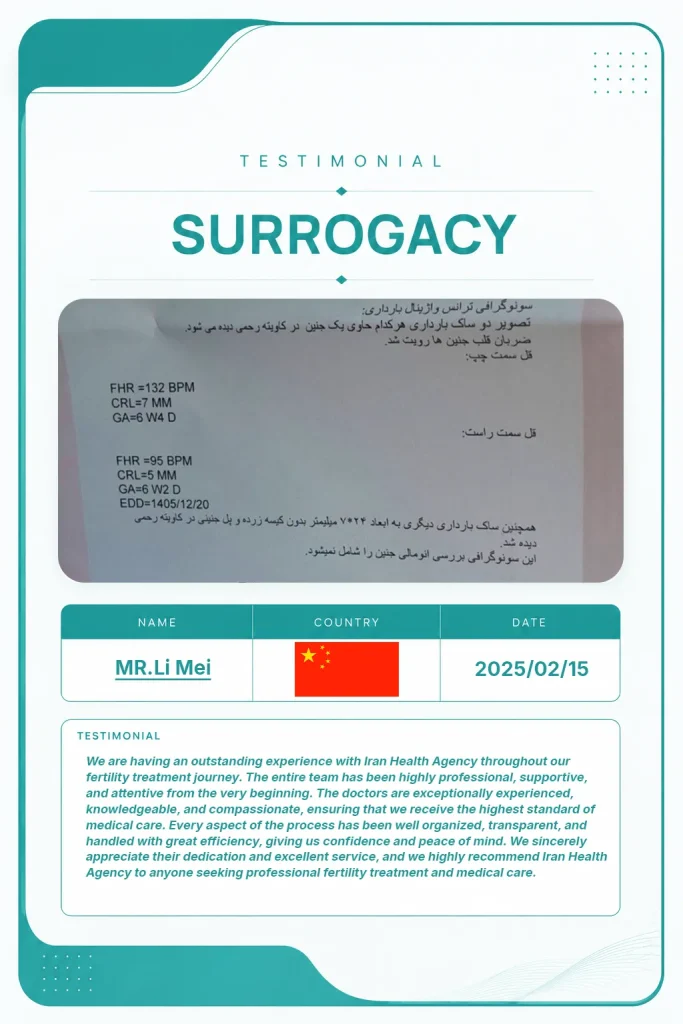
Iran Health’s Success in Surrogacy
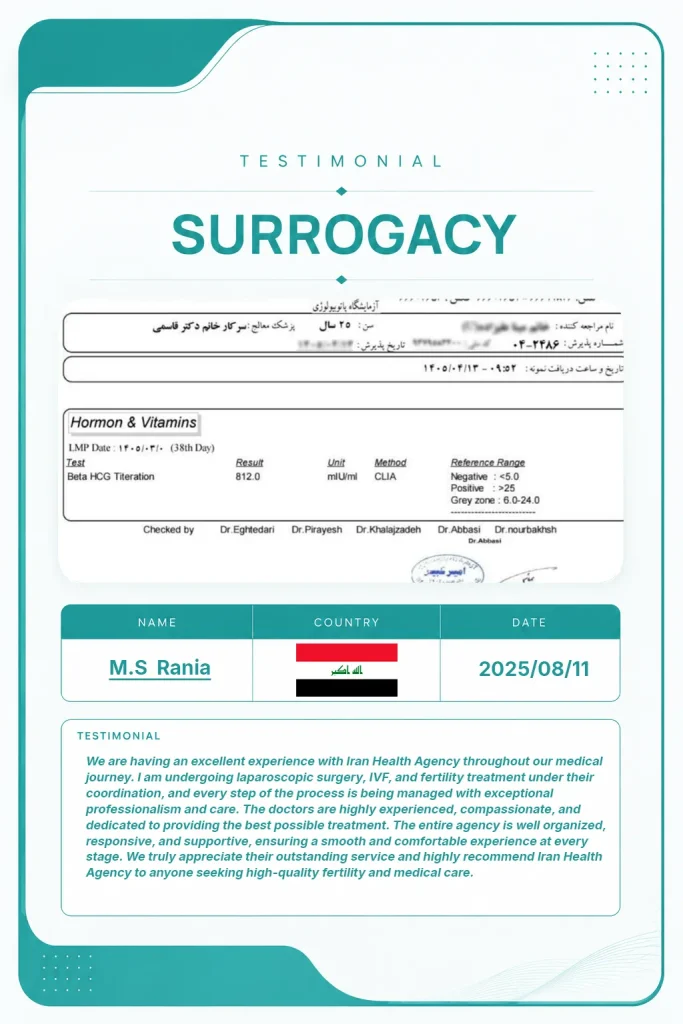
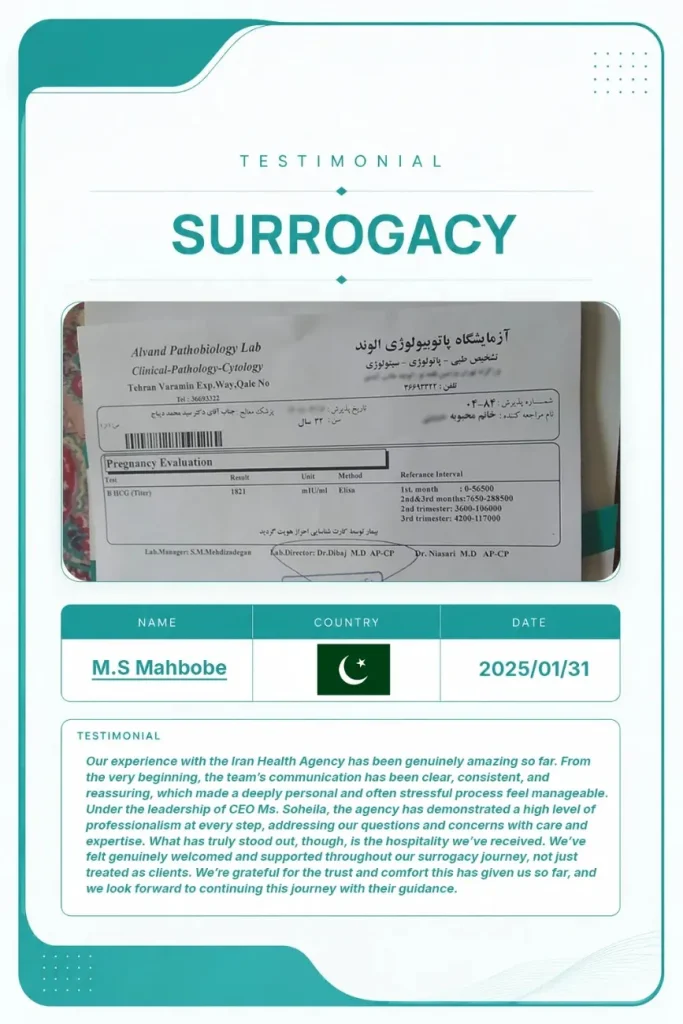
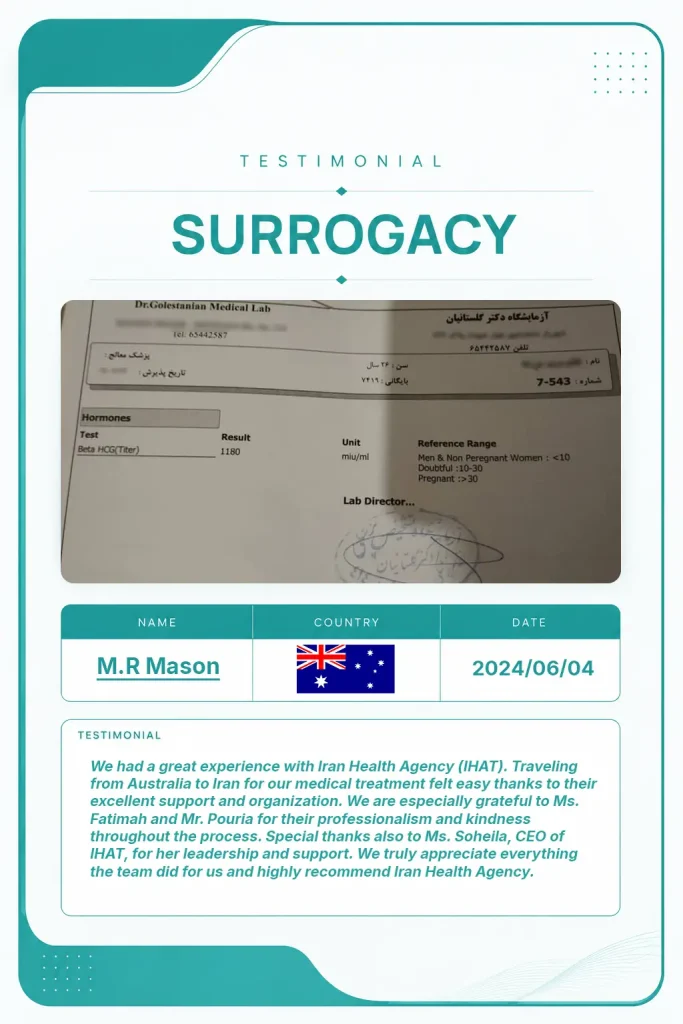
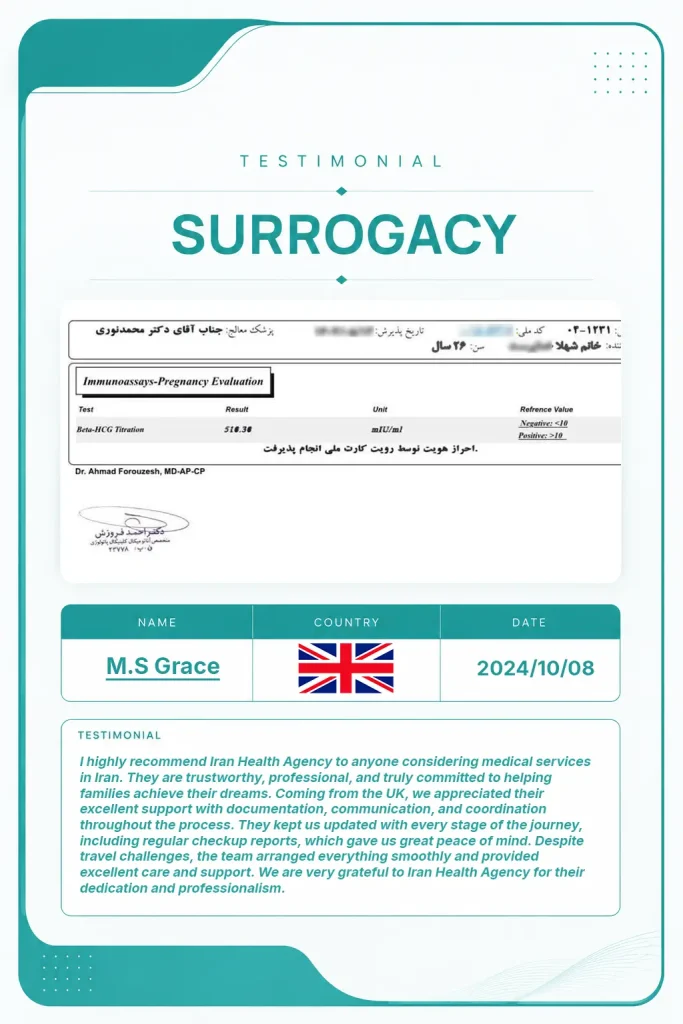
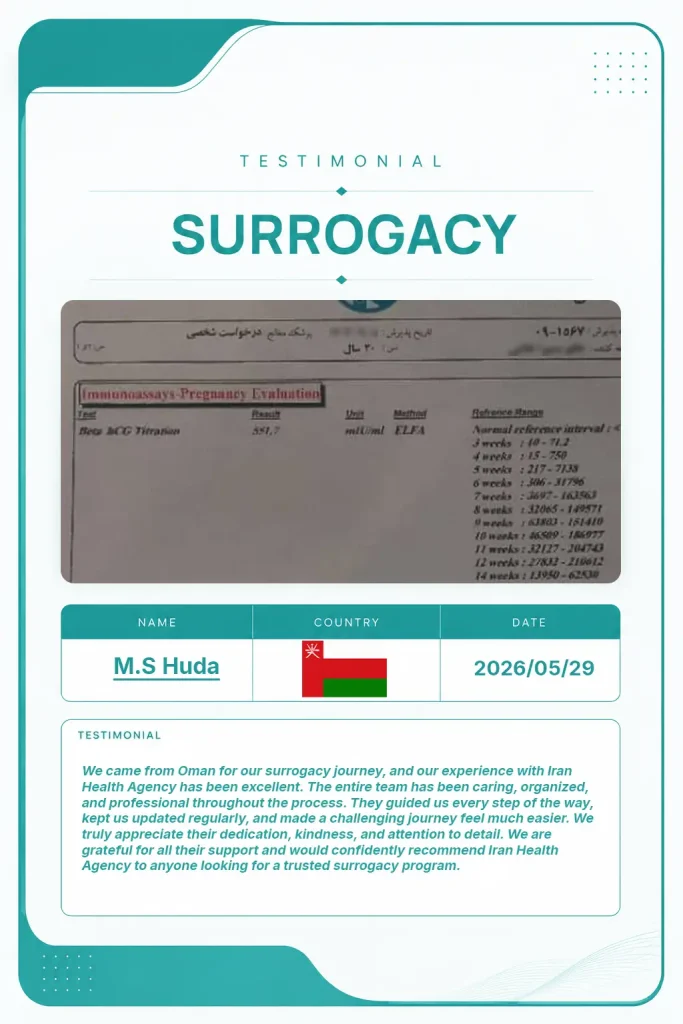
Surrogacy for international (none-Iranian) patients:
For international patients, both intended parents and the selected non-Iranian surrogate must come to Iran for the surrogacy process. IranhealthAgency, as a health provider for infertility treatment, offers services that include legal and religious support, high success rates, and comprehensive fertility services, including egg, Sperm and embryo donation, preimplantation genetic diagnosis (PGD), and gender selection.
The process of surrogacy in Iran
The process of surrogacy in Iran for international patients involves several steps:
- Medical Evaluation: Equally for the Persian intended parents or the non-Iranian surrogate, a comprehensive medical assessment will be carried out to determine if they can participate in the surgery. This includes health screenings that are meant to provide information that may be vital regarding the condition of the surrogate or unborn child.
- Legal Agreement: The intended parents and the surrogate mother should also sign a legal agreement. Through this agreement, which sets forth the terms of surrogacy – who is involved and their responsibilities, the payment structure, and the intended parents’ rights regarding the child – the intended parents and the surrogate decide on all aspects of the surrogacy process.
- Fertility Treatment: The fertility treatment process employs test-tube fertilization (IVF) to produce embryos through the IVF technique, which relies on the woman`s eggs and the man`s sperm to produce those embryos. These surrogates, after that, together with the embryos, are transferred to the uterus of the surrogate’s mother for implantation and pregnancy.
- Pregnancy and Delivery: The surrogate mother is expected to carry the gestation until the termination and birth of the child. The parents who pay the surrogate are present at the delivery, and they choose to take a child from the surrogate mom after the birth.
- Legal Documentation: After the delivery, legal documentation that grants the intended parents the child’s rights as the minor’s natural parents ought to be produced. This confirms the preparation of a birth certificate with the intended parent’s names and possible cooperation with the embassy/consulate, which will require travel documents for the child.
- Return Home: The intended parents can return home with their baby one week after the birth.
The process in Iran is not time-consuming, and intended parents only need to stay in Iran for 21 days for IVF in Iran and egg donation or less than seven days if no procedures are required.
Surrogacy is a legal procedure in Iran that allows medical help if the couple, who has been married for a long time and is heterosexual, experiences infertility. Single individuals, same-sex couples, or those without medical necessity are not permitted to pursue surrogacy in Iran.
Moreover, in Iran, the contractual aspect of the surrogacy process includes detailing the responsibilities, rights, and compensation in the event of failure. Many birth mothers maintain these contracts as they can only come over to visit and not live with their child after his or her birth.
There are two main types of surrogacy contracts recognized in Iran:
surrogacy contracts
- Traditional or Partial Surrogacy: in this type, the surrogate mother is inseminated with the sperm belonging to the intended father. Consequently, the surrogate mother not only bears a child for her commissioners but also a biological offspring of her own.
- Gestational or Full Surrogacy: In Iran, we mainly discuss the sitter and kneeler styles. In gestational surrogacy, the egg from the mother who intends to give birth via IVF is fertilized with the sperm from the father who wants to give birth and the embryo created is implanted into the surrogate mother’s uterus. The escort candidate has no blood relation to the baby.
informative surrogacy contracts:
A well-informed, if not comprehensive, surrogacy contract is a legal treaty that describes the rights and responsibilities of the parties involved in a surrogacy agreement. You should keep in mind that the agreement in this contract is not a substitute for legal advice, and you will have to consult a lawyer to find out the agreement in your state to know if it is enforceable or not.
A comprehensive surrogacy agreement should cover the following key topics:
- An inventory of all of the parties to be involved would be a requirement, comprising of the parents who intend, the surrogate, and if one is involved the donor of the sperm or egg.
- The surrogacy contract will contain information on the agreement, such as the pregnancy conditions apart from the number of embryos to be transferred into the surrogate mother’s uterus and the medical care plan for the surrogate.
- The financial issues stated, such as the surrogate’s pay package and the refund of for medical bills.
- The parental or sibling rights and responsibilities for the children who are born as a result of a surrogacy arrangement (e.g., a baby born to a surrogate mother), and the parental rights and obligations of parents.
- The conditions and reasons for dismissing the agreement.
Legal Pathway & Baby Documents (Foreign Couples)
Iran allows gestational surrogacy for legally married heterosexual couples, including non-Iranians. Clinics and agencies help with both medical treatment and the paperwork needed to bring your baby home. After medical screening and matching, you will sign a formal surrogacy agreement, which will be translated. Your fertility clinic will provide treatment records and confirmation of embryo transfer. After the baby is born, the hospital issues the baby’s birth record, which is translated and notarized.
Depending on your embassy’s rules, you may need a DNA test to confirm biological parentage. Agencies can help arrange accredited testing and prepare translations of your marriage certificate and medical reports. With these documents, you can book an appointment at your embassy to get a travel document or passport for the newborn.
Timelines can vary by embassy, but having translations and legalizations ready in advance can help avoid delays. Throughout the process, you remain the intended/legal parents of the child according to Iran’s regulations for married couples. Reputable agencies offer on-the-ground support for paperwork, translations, and logistics from transfer to exit. This section addresses common concerns regarding legal status, paperwork, and the process of leaving Iran with your baby, thereby reassuring international patients about a documented process supported by the agency.
Are non-Iranian married couples eligible for surrogacy in Iran, and what starter documents are needed?
Document required for foreign nationals pursuing surrogacy
- Photos of the intended parents and the surrogate mother
- Passports and visas of the foreign intended parents showing their validity and arrival stamps in Iran.
- Residence proof of the intended parents in Iran (hotel bookings, rental agreements, utility bills, etc.)
- Notarized surrogacy agreement between the intended parents, surrogate mother, and treating doctors.
- No objection certificate (NOC) from the surrogate mother
- Letter from the foreign embassy/ministry stating that:
a) The country recognizes surrogacy
b) The child born via surrogacy will be allowed entry as a biological child of the intended parents - A discharge letter from the hospital where the child was born
- No dues certificate from the ART (Assisted Reproductive Technology) clinic
- Certificate from ART clinic confirming custody transfer to intended parents and settlement of dues with surrogate1
- Embryology letter from the ART clinic
- Undertaking a letter from the intended parents stating they will take care of the child
- Birth certificate of the child, naming the intended parents, the child’s passport or emergency travel document
- Marriage certificate of the intended parents (if applicable)
- Evidence of the U.S. citizen parent’s physical presence in the U.S. before the child’s birth (e.g., transcripts, tax records)
- Genetic affinity certificate from the surrogate clinic
- Timeline documentation from the clinic for genetic extraction, fertilization, and implantation
- Affidavit from the clinic attesting the procedure followed regulations
The key documents establish the intended parents’ eligibility, the legal surrogacy process, the transfer of parentage rights, and the child’s citizenship/travel credentials. Consulting the specific embassy is advisable, as requirements may vary slightly.





Hi there,
We are an Iranian couple who live in Canada. Both of us are 44 years old, and we have an egg certificate with the clinic from before. However, there are some concerns. We need a surrogate, and finding a healthy lady is hard while we are not physically present in Iran, and secondly we live in Canada, and we need legal support as well. Would you be able to kindly advise about the process?
Sincerely
please contact on whats app n
My name is ……….. Singh and I am from New Delhi India. I am looking IVF/SURROGACY for my son from Canada. The have already tried in Canada. The couple has all the medical reports with them. I need your help to provide information to start this process
i think we are already in touch on whatsapp
Selam Türkiyeden tasiyici annelik için aramıştım eşim 5aylik dusukler yapıyor bu konu hakkında bilgi alabilirmiyim ne yapmamız lazim prosedür nedir oraya nası geliriz nası olur tasiyici anne sizin kliniktemi bilgi alabilirmiyim fiyat ne oluyor
Selam Türkiyeden tasiyici annelik için aramıştım eşim 5aylik dusukler yapıyor bu konu hakkında bilgi alabilirmiyim ne yapmamız lazim prosedür nedir oraya nası geliriz nası olur tasiyici anne sizin kliniktemi bilgi alabilirmiyim fiyat ne oluyor orasi inanın neresi
please text us on whats app